
Gut Health Matters: Simple Steps to Improve Your Digestion Naturally
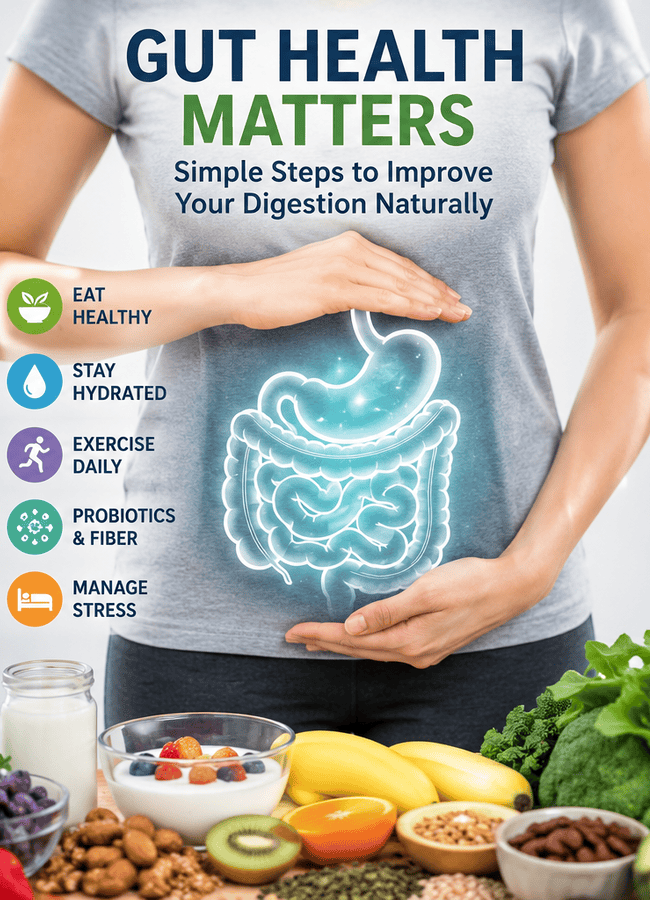
Don’t disregard your stomach’s distress signals if they have been occurring recently. That nagging feeling in your stomach might be an indication of something more serious than a fleeting discomfort. Your general health is greatly influenced by your digestive system, particularly your gut microbiome. Consider it the body’s “canary in the coal mine”—its early warning system for potential problems that may be simmering beneath the surface. To help us better understand the power of gut health, Dr. Kareem Shakoor, a respected gastroenterologist from Colon and Digestive Health Specialists LLC, talked about why maintaining a healthy gut is essential, how it impacts the immune system, and what we can do to keep everything functioning at its best. Why Gut Health Is the Foundation of Wellness As the saying goes, “You are what you eat,” and Dr. Shakoor says that couldn’t be truer. Our internal balance is directly impacted by the foods we eat. Not only does eating a diet high in nutrients help with digestion, but it also boosts energy, the immune system, and even mental clarity. The body’s first line of Defense against dangerous invaders like bacteria, viruses, and toxins is the intricate barrier lining the gut. Better long-term health and fewer infections result from maintaining this barrier’s strength and functionality. Meet Your Microbiome – The Gut’s Defense Army The gut microbiome is the collective term for the trillions of microorganisms that live in our intestines. The body’s unsung heroes are these helpful bacteria, which aid in nutrient absorption, digestion regulation, and pathogen defense. Not all bacteria are harmful, despite what many people think. In actuality, your gut’s beneficial bacteria act as a first line of defense, controlling dangerous microbes. But contemporary life has brought new difficulties. For instance, overuse of antibiotics can eradicate beneficial and dangerous bacteria. Digestive problems, imbalances in the gut, and even chronic illnesses can result from this disturbance. It is therefore more crucial than ever to maintain a healthy microbiome through diet and lifestyle. Gut Health and Your Daily Life: What to Watch For The first indication that something is wrong with your gut may be a slow digestive system. Fatigue, frequent bloating, changes in bowel habits, feeling full for a long time after eating, and even skin conditions can all be signs of an imbalance. According to Dr. Shakoor, these are warning signs that your body is sending to you to take notice. And although constipation is often linked to digestive problems, this isn’t always the case. Significant stool retention can occur in people who have regular bowel movements as well, which can cause discomfort and other systemic symptoms. Everyday Tips for a Happier Gut So, how can you naturally support your digestive system? Dr. Shakoor highlights several important behaviors: Probiotics, Prebiotics, and Fermented Foods Adding probiotics to your diet—either through supplements or fermented foods like yogurt, kefir, sauerkraut, or pickles—can help repopulate good bacteria. Equally important are prebiotic foods, which act as food for those probiotics. Think garlic, onions, bananas, soybeans, and whole grains. These work together to maintain a strong and healthy microbial environment in your gut. High-fiber foods like oats, legumes, avocados, and nuts help maintain soft stool consistency and support regular digestion. They also create an osmotic effect, drawing water into the gut and aiding the passage of waste. Foods to Limit or Avoid Your gut health can be weakened by processed foods, too much sugar, and high-sodium foods like canned soups and chips. These highly preserved foods are difficult to digest and frequently cause inflammation and lethargy. Instead of depending on pre-packaged or long-shelf-life items, Dr. Shakoor advises shopping the outer perimeter of the grocery store, which is where fresh produce and whole foods reside. Moderation and Balance Are Key Overindulgence in even the healthiest foods can lead to imbalances. Balance is key to wellness, as Dr. Shakoor reminds us. Maintaining digestive health can be greatly aided by incorporating variety, staying away from extremes, and paying attention to your body. By paying attention to what you eat, staying hydrated, and tuning in to your body’s signals, you can take proactive steps toward a healthier, happier gut. Dr. Kareem Shakoor’s insights shine a spotlight on how central digestion is to everything else—and how a few lifestyle adjustments can make all the difference” Care at Colon & Digestive Health Specialists Dr. Karim Shakoor, M.D. is a board-certified gastroenterologist and founder of Colon & Digestive Health Specialists, LLC. He completed his residency and fellowship at Cook County Hospital, which is known for having one of the most extensive programs in the country. Karim Shakoor, M.D. is dedicated to providing his patients with the highest level of care to improve their quality of life. He specializes in the treatment of digestive disorders, including abdominal pain, colon cancer, constipation, diarrhea, diverticulitis, gas, gastrointestinal bleeding, heartburn, irritable bowel syndrome, peptic ulcers, swallowing difficulty, and ulcerative colitis. Schedule an appointment | Google Maps | Services| About Us
Colon Polyps: Symptoms You Shouldn’t Ignore, Types, and Why Regular Screening Saves Lives
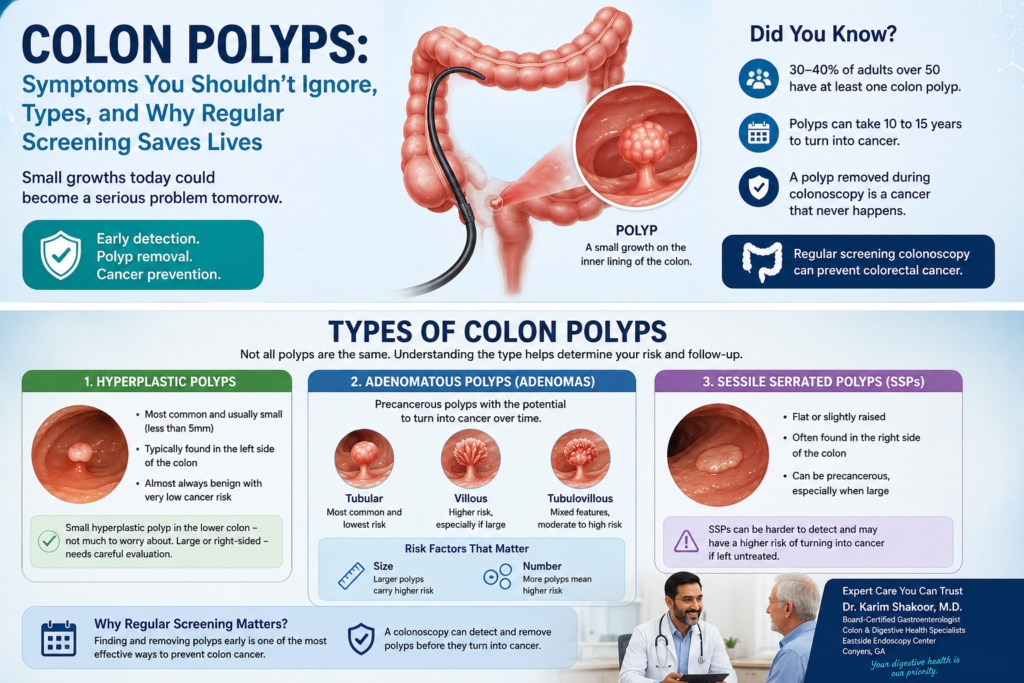
Here’s something that surprises most of our patients: colon cancer is largely preventable. Not just detectable early — actually preventable. And the reason comes down to one thing: colon polyps. A polyp found during a colonoscopy and removed on the spot is a cancer that never gets to happen. That’s not a marketing line — it’s the biological reality of how colorectal cancer develops. Almost every case of colorectal cancer starts as a polyp that went undetected and, over a period of years, transformed into something dangerous. The challenge is that most polyps produce no symptoms at all. They grow silently, which is exactly why so many people don’t know they have them until a routine screening colonoscopy finds one — or, in worse cases, until symptoms appear and the disease is already advanced. What Are Colon Polyps? A colon polyp is an abnormal growth of tissue that develops on the inner lining of the large intestine (colon) or rectum. Think of them as small bumps or projections — they can be as tiny as a sesame seed or grow to be larger than a grape. The critical thing to understand is that polyps are common. Very common. Roughly 30–40% of adults over 50 in the United States have at least one colon polyp, according to colonoscopy data. That number climbs higher with age. Most people who have a polyp removed have no idea they ever had one because it caused them no symptoms whatsoever. The colon has no pain receptors capable of signaling a small growing polyp. Your body gives you no warning until complications arise — which, in some cases, means waiting until cancer is already present. This is why colonoscopy exists: to look inside the colon and catch what your body won’t tell you about on its own. Types of Colon Polyps: Not All Are Created Equal This is the part most online resources gloss over — but it’s genuinely important, because the type of polyp your doctor finds determines your cancer risk and how frequently you need follow-up colonoscopies. 1. Hyperplastic Polyps Hyperplastic polyps are the most common type found during colonoscopy. They’re small, typically less than 5mm, usually appear in the left side of the colon (sigmoid colon and rectum), and are almost always benign. The important detail: small hyperplastic polyps in the left colon have very low malignant potential and don’t change your follow-up schedule significantly. However, large hyperplastic polyps (10mm or greater) and hyperplastic polyps found in the right colon (ascending colon and cecum) are treated with more caution — they may be reclassified as serrated lesions, which do carry elevated risk. 2. Adenomatous Polyps (Adenomas) — The Most Important Category Adenomas are the polyps that gastroenterologists take most seriously, because they are genuinely precancerous. Left alone and given enough time, some adenomas will progress to colorectal cancer. Adenomas are not cancer — but they have the potential to become cancer, which is why removing them is so important. Adenomas are further classified by their internal structure: Tubular adenomas are the most common adenoma subtype, making up roughly 80% of adenomas found. They’re typically smaller and have a lower risk of malignant transformation than the other subtypes — particularly when they’re small (less than 1cm) and found in limited numbers. Villous adenomas have finger-like projections extending from their surface. They’re less common but carry a significantly higher risk of harboring cancer cells than tubular adenomas — particularly when large. Villous adenomas greater than 2cm have malignant potential upward of 40%. 3. Sessile Serrated Lesions (SSL) — The Sneaky Ones Sessile serrated lesions (previously called sessile serrated adenomas or SSAs) deserve special attention because they’re responsible for a disproportionate share of “interval cancers” — cancers that develop between scheduled colonoscopies. Here’s why they’re tricky: SSLs are flat, wide, and often covered by a mucus cap that makes them blend into the colon lining. They’re easy to miss, particularly in the right colon where they predominantly occur, and where the colon wall has more folds. An experienced, thorough endoscopist with excellent technique and adequate withdrawal time is more likely to find them. 4. Inflammatory Polyps Inflammatory polyps (also called pseudopolyps) develop as a result of longstanding inflammation in the colon — most commonly in patients with ulcerative colitis or Crohn’s disease. They’re not themselves precancerous, but their presence in the context of IBD is a marker of significant prior inflammation, and these patients require heightened surveillance because IBD itself increases colorectal cancer risk over time. 5. Hamartomatous Polyps Hamartomatous polyps are associated with rare hereditary syndromes — particularly Peutz-Jeghers syndrome and juvenile polyposis syndrome. These conditions require specialist management and genetic counseling, as they carry elevated risks not only for colorectal cancer but for cancers in other organs as well. Colon Polyp Symptoms: What to Watch For We want to be direct with you here: most colon polyps cause no symptoms at all. This isn’t a caveat or a disclaimer — it’s the central clinical reality that makes screening so essential. The absence of symptoms is the rule, not the exception. That said, larger polyps or polyps in certain locations can produce symptoms. Knowing what to watch for is worthwhile — not because symptoms will reliably alert you to polyps, but because these signs should always prompt an evaluation regardless of their cause. Rectal Bleeding or Blood in Stool Blood in the stool is the symptom most commonly associated with colon polyps. It may appear as bright red blood on toilet paper, blood coating the stool, or darker blood mixed into the stool. It may also be invisible — detected only through a fecal occult blood test (FOBT) or fecal immunochemical test (FIT). Here’s the important nuance: rectal bleeding is far more commonly caused by hemorrhoids or anal fissures than by polyps or cancer. But you cannot determine the source of rectal bleeding without a proper evaluation. Assuming bleeding is from hemorrhoids without confirming it is a mistake that delays cancer diagnoses every year.
Types of Colon Cancer: A Specialist’s Guide to Understanding Stage and Subtype
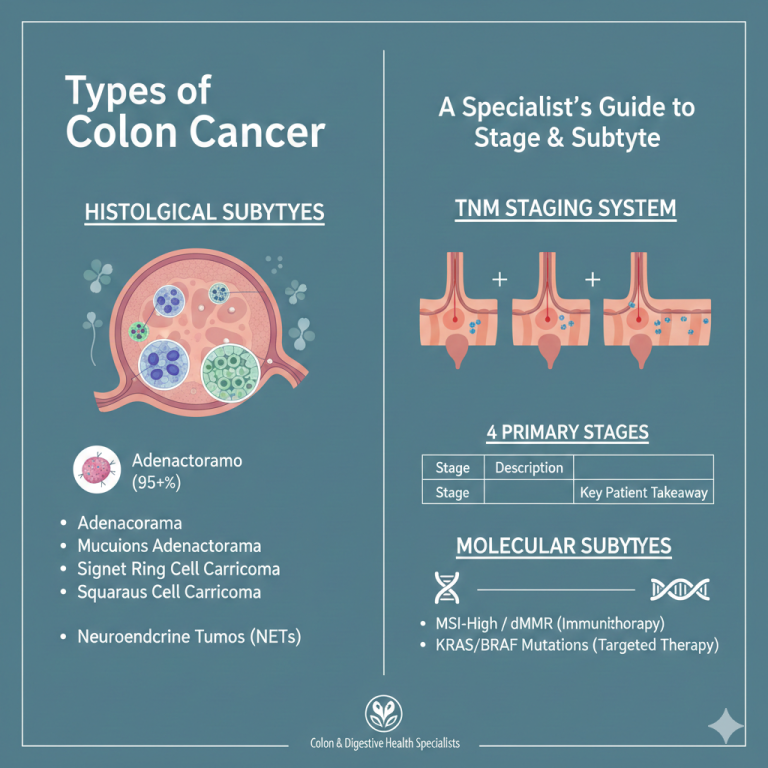
The moment a patient hears the phrase “colon cancer,” the world stops. It’s an emotional and frightening experience. The very next question, often unspoken, is, “What kind do I have, and what does it mean for me?” Understanding the different types of colon cancer is the vital first step toward developing an effective treatment plan and establishing a prognosis. As Colon & Digestive Health specialists, our purpose is to move beyond the initial diagnosis, offering you a clear, expert roadmap to comprehending the precise nature of your condition, from its specific cellular subtype to its broader stage. This comprehensive guide will illuminate the critical differences between the cancers that can arise in the colon, providing the genuine, trustworthy information you need to move forward with confidence. The Main Types of Colon Cancer: Histological Subtypes While most people refer to the disease simply as “colon cancer” or “colorectal cancer,” it is medically classified into distinct subtypes based on the cell type where the cancer originates. This classification is known as histopathology and is the foundation for selecting the right treatment. Adenocarcinoma: The Most Common Colon Cancer The vast majority (over 95%) of all colorectal cancers fall into this category. Rare but Critical Subtypes of Colorectal Cancer While far less common, these subtypes require a unique approach due to their different growth patterns and response to therapy. These often become the focus of specialized research and treatment. Understanding Stage: Why TNM Classification is Crucial The type of colon cancer tells us what the cancer is, but the stage tells us how far it has progressed. Staging is arguably the most crucial factor in determining the most effective treatment plan, the overall prognosis, and the required surgical approach. The TNM Staging System: The Universal Standard Specialists use the American Joint Committee on Cancer (AJCC) TNM classification system to define the stage. This universal language for cancer staging is essential for clinical trials and specialist communication. The 4 Primary Stages of Colon Cancer The T, N, and M values are combined to assign one of four main stages (plus Stage 0): Stage Description Key Patient Takeaway Stage 0 Abnormal cells only in the innermost layer (in situ). Highly treatable, often curable with local excision (polyp removal). Stage I Cancer has grown into the deeper layers of the wall but not through the wall and no spread to lymph nodes. Excellent prognosis; usually treated with surgery alone. Stage II Cancer has grown through the colon wall (T3 or T4) but has not spread to lymph nodes (N0). May require additional chemotherapy after surgery (adjuvant therapy), depending on specific risk factors. Stage III Cancer has spread to nearby lymph nodes (N1 or N2) but not to distant organs (M0). Requires a combination of surgery and aggressive chemotherapy to reduce the risk of recurrence. Stage IV Cancer has spread (metastasized) to distant organs (M1), such as the liver, lungs, or peritoneum. Treatment is complex, often involves systemic therapies (chemo, targeted therapy, immunotherapy), and sometimes surgery to remove metastatic sites. Advanced Molecular Subtypes: The Future of Colon Cancer Treatment In the last decade, our understanding has evolved far beyond simple staging. Modern, specialist-led digestive health centers now use molecular subtyping to guide therapy, which is often the key to unlocking better outcomes. This is critical for predicting how the tumor will respond to specific drugs. Secondary Keyword H2: Genomic Biomarkers in Colorectal Cancer The most high-volume and clinically relevant secondary keywords in this area are the specific biomarkers that patients and their families frequently search for when reviewing their pathology reports. Microsatellite Instability (MSI) and Mismatch Repair (MMR) What it is: Microsatellite instability (MSI) is a condition where defects in the cell’s Mismatch Repair (MMR) system prevent it from correctly fixing DNA errors. This results in numerous genetic mutations within the tumor. Clinical Impact: Tumors that are MSI-High (MSI-H) or dMMR (deficient MMR) often have a favorable prognosis in early stages and are highly responsive to immunotherapy in later stages. This is a game-changer in treatment planning, as immunotherapy can offer long-lasting control for some patients with metastatic disease. The Significance of KRAS and BRAF Mutations What it is: These are common mutations found in the genes KRAS and BRAF, which drive cell growth and division. Clinical Impact: The presence of a KRAS mutation often indicates that a tumor will not respond to a class of targeted drugs known as EGFR inhibitors. Detecting a BRAF V600E mutation often suggests a more aggressive form of the cancer, which requires a specific combination of targeted and standard chemotherapy to address. Knowing these results allows specialists to immediately rule out ineffective treatments and zero in on the most promising regimens. Our Commitment to Expert-Driven Care Navigating the complexities of types of colon cancer—from rare histological subtypes to nuanced molecular findings—demands a team dedicated to the highest standards of medical practice. Our specialists at Colon & Digestive Health are leaders in the field, with decades of collective experience in diagnosing and treating all stages of colorectal cancer. Our commitment to precise, authoritative care means: Understanding the difference between an Adenocarcinoma Stage I and a Signet Ring Cell Carcinoma Stage III is not just an academic exercise—it is the difference between a simple surgical cure and a long, complex course of systemic therapy. It dictates your next steps. Dr. Karim Shakoor, M.D. is a board-certified gastroenterologist and founder of Colon & Digestive Health Specialists, LLC. He completed his residency and fellowship at Cook County Hospital, which is known for having one of the most extensive programs in the country. Karim Shakoor, M.D. is dedicated to providing his patients with the highest level of care to improve their quality of life. He specializes in the treatment of digestive disorders, including abdominal pain, colon cancer, constipation, diarrhea, diverticulitis, gas, gastrointestinal bleeding, heartburn, irritable bowel syndrome, peptic ulcers, swallowing difficulty, and ulcerative colitis. Schedule an appointment | Google Maps | Services| About Us
What to Expect Before, During, and After a Colonoscopy: A Complete Guide
One of the best diagnostic procedures for identifying colorectal problems, such as polyps, inflammatory bowel disease, and colon cancer, is a colonoscopy. You probably have questions like “How long does a colonoscopy take?” “How is recovery like?” and “How should I prepare?” if your doctor has recommended this procedure. This comprehensive guide will make sure you are informed and comfortable by taking you through every step of the process, from getting ready for a colonoscopy to recovering from one. Why Is a Colonoscopy Important? During a colonoscopy, gastroenterologists use a flexible tube equipped with a camera to look at the lining of your colon and rectum. It is an essential tool for the early detection of digestive disorders like colon cancer and By identifying issues before they worsen, early detection via a colonoscopy can save lives. Preparing for a Colonoscopy Proper preparation is crucial to ensure your colon is completely clean, which helps your doctor get a clear view during the procedure. Here’s how to get ready: 1. Modifications to Diet Prior to the Process You will be instructed to begin a clear liquid or low-fiber diet three to four days prior to the colonoscopy. Steer clear of foods high in fiber, such as whole grains, nuts, seeds, and raw vegetables. Suggested foods: 2. Preparing the Bowel (Laxatives) The night before your procedure, your doctor will prescribe a bowel prep solution, which is typically a drink made of polyethylene glycol. This aids in colon cleansing. Advice: 3. Medication Adjustments Inform your doctor about any medications you’re taking, including: You may need to adjust or stop these before your procedure. How Long Does a Colonoscopy Take? The actual process of a colonoscopy is usually completed in 30 to 60 minutes. Below is a summary of what to anticipate: 1. Prior to the procedureArrive one to one and a half hours early. An IV will be inserted for sedation after you check in and change into a gown. 2. Throughout the ProcessAfter the patient is sedated, the physician will examine the entire colon with a colonoscope inserted into the rectum. If polyps are discovered, they may remove them or take tissue samples (biopsies). 3. After the ProcedureAs the sedative wears off, you will be observed. Prior to being released, the majority of patients take a 30- to 60-minute nap. What is the duration of a colonoscopy from beginning to end? You should anticipate being at the clinic for two to three hours in total. Recovery After Colonoscopy: What to Expect Although the procedure is minimally invasive, knowing what happens afterward is important for peace of mind and planning. 1.Immediate Colonoscopy Recovery You may feel: 2. When Can You Eat? Once fully awake, most patients can resume eating bland, light foods. Begin by: To avoid discomfort, stay away from heavy or spicy meals for a day. 3. When to Get Back to Your Regular Activities Although full recovery may vary if a polyp was removed, most people resume their regular activities the following day. It is advised to engage in mild exercise for 24 hours after the procedure. Signs to Watch for After a Colonoscopy Although complications are rare, contact your doctor immediately if you experience: How to Support Your Digestive Health Post-Colonoscopy It’s crucial to keep your digestive system in good condition following your colonoscopy. Think about: Your doctor will advise you on the next course of action, including possible follow-up visits or treatments, if any abnormalities were discovered. Final Thoughts A colonoscopy is a straightforward, secure, and extremely beneficial procedure for identifying and preventing serious gastrointestinal disorders, despite the fact that the concept may seem frightening. You can go into your appointment with confidence if you are well-prepared, know the procedure, and take good care of yourself after the procedure. FAQs Q1: How should I mentally prepare for a colonoscopy? It’s natural to feel anxious. Talk to your doctor, ask questions, and remember the procedure is short, safe, and often painless due to sedation. Q2: Can I work the day after the colonoscopy? Yes, most people can resume work and normal activities the next day, unless otherwise advised by their doctor. Q3: Will I need someone to accompany me? Yes. Due to sedation, you’ll need a responsible adult to drive you home after the procedure.
Bleeding in Stool: Causes, Symptoms & When to Worry
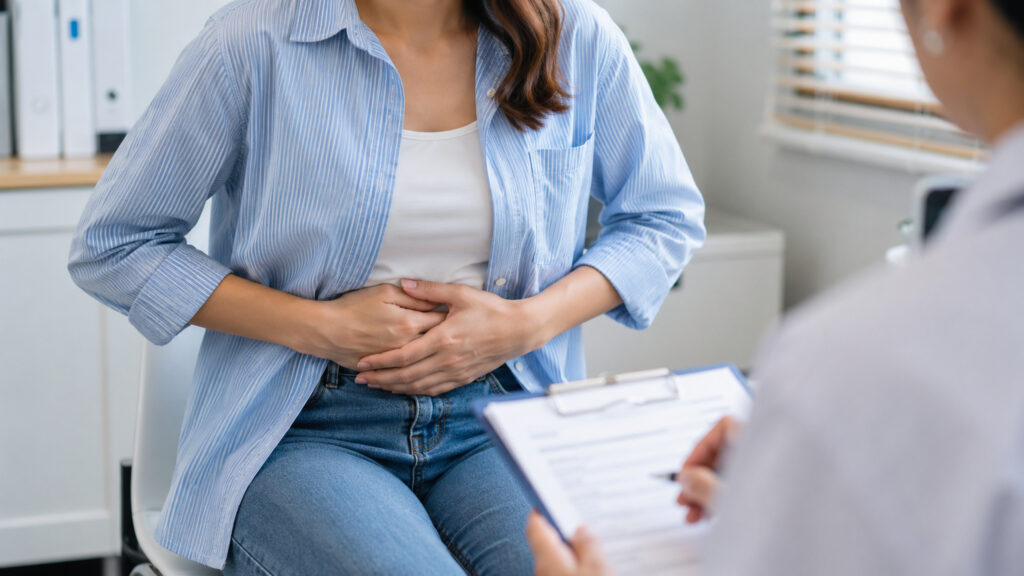
Introduction: Should You Be Concerned About Blood in Your Stool? Finding blood in your stool is alarming — and it should get your attention. But it doesn’t automatically mean the worst. Blood in stool is one of the most common reasons patients visit a gastroenterologist, and the causes range from something as straightforward as a hemorrhoid to conditions that require immediate medical intervention. What matters most is not panicking, but also not ignoring it. At Colon & Digestive Health Specialists in Conyers, GA, our board-certified gastroenterologists evaluate rectal bleeding and gastrointestinal bleeding regularly. This guide gives you medically accurate, straightforward information — what the blood actually looks like, what’s causing it, which symptoms demand urgent care, how doctors diagnose it, and what treatment looks like depending on the underlying condition. What Does Blood in Stool Look Like? This is the first question most patients ask — and the answer matters clinically, because the color and consistency of the blood tells your gastroenterologist a great deal about where in your digestive tract the bleeding is coming from. Bright Red Blood Bright red blood in stool — on toilet paper, in the toilet bowl, or coating the outside of stool — typically signals bleeding in the lower digestive tract: the rectum, anus, or lower colon. This is the most common presentation and is frequently caused by hemorrhoids or anal fissures. Bright red blood is “fresh” — it hasn’t traveled far through the digestive system before you see it. Dark Red or Maroon Blood Dark red or maroon-colored blood mixed into the stool usually indicates bleeding from the mid to upper colon or from the small intestine. The blood has traveled further through the digestive tract, giving it a darker appearance. This presentation is more concerning than bright red blood and warrants prompt medical evaluation. Black, Tarry Stools (Melena) Black, tarry, or sticky stools with a distinctly foul odor — called melena — indicate bleeding in the upper gastrointestinal tract: the esophagus, stomach, or upper small intestine (duodenum). The blood has been partially digested as it moved through the GI tract, turning it black. Melena is a medical concern and should always be evaluated by a physician. Do not wait to see if it resolves on its own. Occult Blood (Invisible) Sometimes, blood in stool is not visible to the naked eye at all. This is called occult blood — hidden bleeding that can only be detected through a laboratory test called a fecal occult blood test (FOBT) or a fecal immunochemical test (FIT). This is why routine colorectal cancer screening matters — occult bleeding from polyps or early tumors produces no visible symptoms. Blood may occasionally be completely invisible, in which case a fecal occult blood test is necessary to detect it. What Can Cause Bleeding in Stool? Rectal bleeding and gastrointestinal bleeding have many potential causes. Understanding the most common ones helps you have a more informed conversation with your doctor. 1. Hemorrhoids Hemorrhoids — swollen veins in the rectum or anus — are the most common cause of bright red rectal bleeding in adults. They can be internal (inside the rectum) or external (under the skin around the anus). What it looks like: Bright red blood on toilet paper, coating the outside of stool, or dripping into the toilet bowl. Usually painless with internal hemorrhoids; external hemorrhoids may cause pain, itching, or swelling. Who gets them: Anyone, but risk increases with chronic constipation, straining during bowel movements, pregnancy, a low-fiber diet, and prolonged sitting. Key point: Hemorrhoids do not cause black or dark tarry stools. If your stool is dark, another cause needs to be investigated. 2. Anal Fissures An anal fissure is a small tear in the lining of the anal canal — similar to a paper cut, but in a very sensitive location. Fissures are extremely common and are typically caused by passing hard, large, or dry stools. What it looks like: Bright red blood on toilet paper, often accompanied by sharp pain or burning during and after a bowel movement. Unlike hemorrhoids, anal fissures are almost always painful. Who gets them: People with chronic constipation, those who strain excessively during bowel movements, and postpartum women. 3. Diverticular Bleeding Diverticulosis refers to small pouches (diverticula) that form in the walls of the colon. Most diverticula never cause problems — but occasionally, a blood vessel near a pouch ruptures, causing diverticular bleeding, which can be significant. What it looks like: Sudden, painless passage of a large amount of bright red or dark red blood from the rectum. This type of bleeding can be dramatic and may require hospitalization. Who gets them: More common in adults over 50 and those with a history of diverticulosis. Diverticular bleeding is one of the most common causes of lower GI bleeding in older adults. Important note: Diverticular bleeding often stops on its own, but it can recur and sometimes requires intervention. 4. Colorectal Polyps and Colorectal Cancer Colorectal polyps are abnormal growths on the lining of the colon or rectum. Most polyps are benign, but certain types — particularly adenomas — can become cancerous over time if not removed. What it looks like: Polyps typically bleed slowly and in small amounts. The blood may be bright red, dark, or entirely occult (invisible). This is why routine colonoscopy screening is so critical — polyp bleeding often produces no noticeable symptoms until the disease is advanced. Colorectal cancer can also cause rectal bleeding, changes in bowel habits, unexplained weight loss, and fatigue. It is the third most commonly diagnosed cancer in the United States. 5. Inflammatory Bowel Disease (IBD) Inflammatory bowel disease — which includes Crohn’s disease and ulcerative colitis — causes chronic inflammation of the digestive tract that can lead to rectal bleeding, diarrhea, abdominal cramping, and fatigue. What it looks like: Blood mixed in with loose or watery stool, often accompanied by urgency, cramping, and mucus in the stool. IBD bleeding tends to be recurrent rather than a single episode. Who gets it: IBD
Do Probiotics Actually Work? What Gastroenterologists Want You to Know
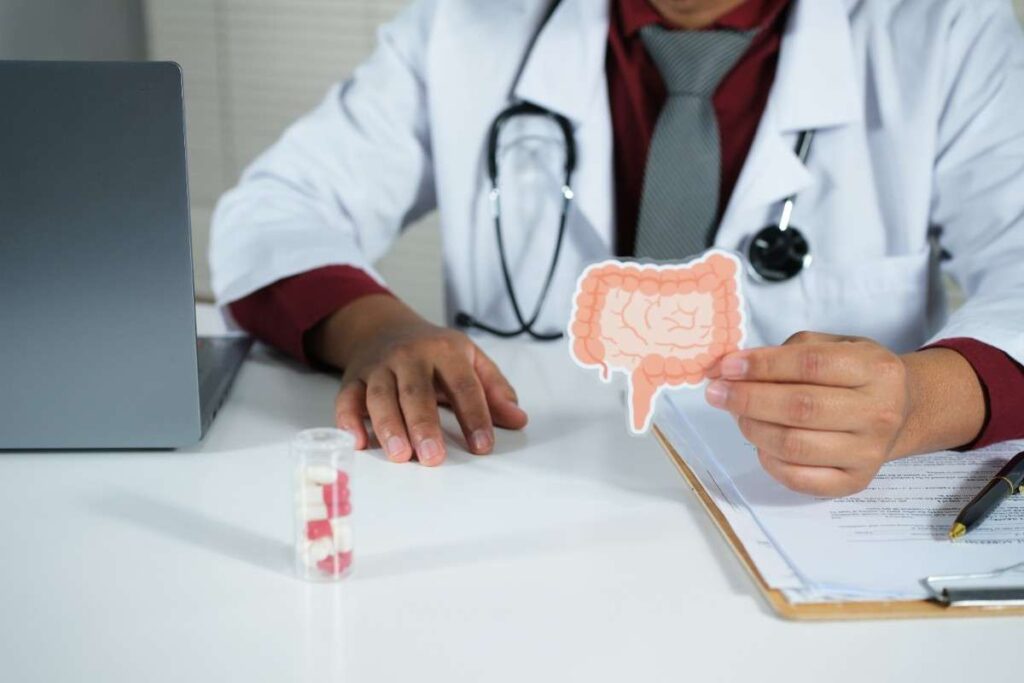
Home Who We Are Our Team Krisna Patel Karim K Shakoor Our Services Colonoscopy EGD/Upper Endoscopy Flexible Sigmoidoscopy Our Expertise Abdominal pain Colon Cancer Constipation Diarrhea Diverticulitis Swallowing Difficulty Gastrointestinal Bleeding Heartburn Irritable Bowel Syndrome Peptic Ulcers Gas Ulcerative Colitis New Patient EEC Blog Contact Us Hamburger Toggle Menu Pay Bill Appointments Do Probiotics Actually Work? What Gastroenterologists Want You to Know If you walk down the health aisle of any grocery store , you’re met with a wall of colorful bottles promising “optimal gut health,” “immune support,” and “digestive balance.” Probiotics have become a multi-billion dollar industry, but as a patient, you’re likely left with one burning question: Do they actually work, or is it just expensive bacteria? At Colon & Digestive Health Specialists, we see patients every day who are self-treating with over-the-counter (OTC) supplements. While the “gut microbiome” is the frontier of modern medicine, the reality of probiotics is more nuanced than a marketing label suggests. Here is what our board-certified gastroenterologists at Eastside Endoscopy Center want you to know before you take your next capsule. Understanding the Microbiome: Your Inner Ecosystem To understand if probiotics work, you first have to understand what they are trying to fix. Your gut is home to trillions of microorganisms—bacteria, fungi, and viruses—collectively known as the microbiome. When this ecosystem is balanced, your digestion is smooth, your immune system is sharp, and even your mood is stabilized. However, factors like a poor diet, high stress, or a round of antibiotics can cause dysbiosis—an imbalance where “bad” bacteria outnumber the “good.” The Clinical Truth: Do Probiotics Actually Work? The short answer is: Yes, but with a major asterisk. Probiotics are not a “one-size-fits-all” miracle pill. Their effectiveness depends entirely on three factors: The Strain: Different strains do different jobs. The CFU Count: Colony Forming Units (CFUs) determine the potency. The Condition: Are you treating occasional bloating, or are you managing Ulcerative Colitis? Where Probiotics Shine Clinical research supports the use of specific probiotics for: Antibiotic-Associated Diarrhea: Taking probiotics during a course of antibiotics can help prevent the “wipeout” of good bacteria. Infectious Diarrhea: Certain strains can shorten the duration of stomach bugs. IBS Management: For many patients in our Conyers clinic, specific strains like Bifidobacterium infantis have shown success in reducing bloating and gas. What the Labels Don’t Tell You As gastroenterologists, our concern with the “probiotic craze” stems from the lack of regulation. Because these are sold as supplements, they aren’t held to the same rigorous FDA standards as the medications we prescribe at Eastside Endoscopy Center. 1. The “Dead on Arrival” Problem Probiotics are living organisms. They are sensitive to heat, light, and stomach acid. Many off-the-shelf supplements lose their potency before they ever reach your lower intestine. 2. More Isn’t Always Better A supplement boasting “50 Billion CFUs” isn’t necessarily better than one with 5 Billion. If the 50 Billion are the wrong strains for your specific GI profile, they won’t provide relief. 3. The Risk of SIBO In some cases, introducing more bacteria—even “good” bacteria—into a gut that is already imbalanced can lead to Small Intestinal Bacterial Overgrowth (SIBO), actually worsening symptoms like extreme bloating and pain. A Food-First Approach to Gut Health Before reaching for a supplement, our specialists often recommend focusing on Prebiotics. While probiotics are the “seeds,” prebiotics are the “fertilizer.” Incorporating naturally fermented foods can often provide a more diverse array of bacteria than a single pill: Kefir and Yogurt: Look for “Live and Active Cultures.” Sauerkraut and Kimchi: Ensure they are refrigerated (not canned) to keep the bacteria alive. Fiber-rich foods: Garlic, onions, and bananas feed the healthy bacteria already in your gut. When to Stop Supplementing and Start Screening Probiotics can mask symptoms of more serious underlying issues. If you are taking supplements to manage persistent pain, changes in bowel habits, or unexplained weight loss, it is time for a professional evaluation. At Eastside Endoscopy Center LLC, we provide comprehensive diagnostic services, including colonoscopies and EGDs, to ensure that “bloating” isn’t actually a sign of something that requires clinical intervention. Take Control of Your Digestive Health in Conyers Don’t guess when it comes to your gut health. If you’re struggling with digestive discomfort, the team at Colon & Digestive Health Specialists is here to help you move beyond supplements and find lasting solutions. At Colon & Digestive Health Specialists, we provide personalized care plans designed to address both digestive health and stress-related triggers. For Life-Threatening Emergencies Call 911 Our location Colon & Digestive Health Specialists 1805 Honey Creek Commons, Ste B, Conyers GA 30013 Menu Home Our Team New Patient CDH Gallery Contact Us Privacy Policy Timings Monday – Friday : 7:30am – 4:00 pmSaturday & Sunday – CLOSED Facebook © 2026 All Rights reserved by Colon & Digestive Health Specialists
IBS (Irritable Bowel Syndrome) and Stress: Understanding the Gut-Brain Connection
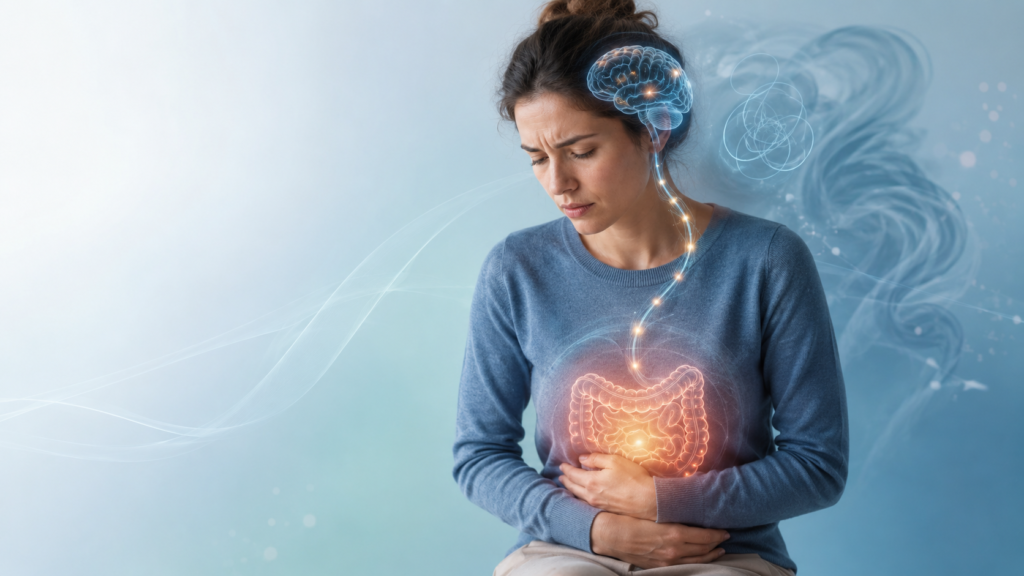
Colon & Digestive Health Specialists Dr. Karim Shakoor, M.D. & Team Pay Bill Appointments Home Who We Are Our Team Krisna Patel Karim K Shakoor Our Services Colonoscopy EGD/Upper Endoscopy Flexible Sigmoidoscopy Our Expertise Abdominal Pain Colon Cancer Constipation Diarrhea Diverticulitis Swallowing Difficulty Gastrointestinal Bleeding Heartburn Irritable Bowel Syndrome Peptic Ulcers Gas Ulcerative Colitis New Patient EEC Blog Contact Us Hamburger Toggle Menu Home Who We Are Our Team Krisna Patel Karim K Shakoor Our Services Colonoscopy EGD/Upper Endoscopy Flexible Sigmoidoscopy Our Expertise Abdominal Pain Colon Cancer Constipation Diarrhea Diverticulitis Swallowing Difficulty Gastrointestinal Bleeding Heartburn Irritable Bowel Syndrome Peptic Ulcers Gas Ulcerative Colitis New Patient EEC Blog Contact Us Hamburger Toggle Menu Pay Bill Appointments IBS (Irritable Bowel Syndrome) and Stress: Understanding the Gut-Brain Connection IBS (Irritable Bowel Syndrome) is one of the most common digestive disorders, affecting millions of people worldwide. Many patients notice that their IBS symptoms worsen during periods of emotional stress, anxiety, or major life changes. This is not a coincidence. IBS (Irritable Bowel Syndrome) and stress are closely linked through what doctors call the gut-brain connection — a complex communication system between your digestive system and your nervous system. If you’ve ever experienced abdominal pain before a stressful event or noticed digestive flare-ups during emotional strain, your body is showing you how deeply connected your gut and brain truly are. In this guide, we’ll explain how stress affects IBS, why symptoms flare up, and what you can do to regain control of your digestive health. What Is IBS (Irritable Bowel Syndrome)? IBS (Irritable Bowel Syndrome) is a functional gastrointestinal disorder that affects how the intestines work. Unlike inflammatory bowel diseases, IBS does not cause structural damage to the digestive tract, but it significantly impacts daily life. Common IBS Symptoms People with IBS often experience: Recurrent abdominal pain or cramping Bloating and excessive gas Diarrhea, constipation, or alternating between both Urgency to use the bathroom Mucus in stool Symptoms tend to come and go, often triggered by diet, hormonal changes, or stress. The Gut-Brain Connection Explained The digestive system has its own nervous system called the enteric nervous system, sometimes referred to as the “second brain.” This system communicates directly with the central nervous system through the vagus nerve. How Stress Affects the Digestive System When you experience stress: Stress hormones like cortisol are released Gut motility (movement of intestines) changes Sensitivity to pain increases Gut bacteria balance may shift Inflammation may rise For people with IBS (Irritable Bowel Syndrome), the digestive tract is already more sensitive. Stress amplifies this sensitivity, leading to stronger IBS symptoms. Can Stress Cause IBS? Stress alone may not directly cause IBS, but it is a powerful trigger. Many patients report that their first IBS symptoms appeared during: Major life transitions Work pressure Relationship stress Anxiety or depression IBS Flare-Up Triggers Related to Stress Common stress-related IBS flare triggers include: Lack of sleep Emotional trauma Chronic workplace pressure Travel anxiety Social stress IBS Pain Location: Why Stress Makes It Worse Many patients ask about IBS pain location. IBS pain is typically felt in the lower abdomen but can vary from person to person. During stress: Muscles in the intestines contract irregularly Gas builds up Cramping intensifies Because IBS involves heightened pain sensitivity (visceral hypersensitivity), stress makes normal digestive activity feel painful. IBS Diarrhea vs IBS Constipation and Stress IBS has different subtypes: IBS-D (diarrhea predominant) IBS-C (constipation predominant) IBS-M (mixed type) Stress affects each subtype differently. Stress and IBS Diarrhea Stress speeds up intestinal movement, leading to urgency and loose stools. Stress and IBS Constipation Stress may slow bowel movement or tighten pelvic muscles, causing difficulty passing stool. Understanding your subtype helps tailor treatment strategies. How Is IBS Diagnosed? IBS (Irritable Bowel Syndrome) is diagnosed based on symptoms and medical evaluation. Abdominal pain at least one day per week Symptoms lasting at least three months Association with bowel movement changes IBS Tests and Evaluation While there is no single “IBS test,” doctors may perform: Blood tests Stool tests Colonoscopy (if red-flag symptoms exist) Imaging studies Testing helps rule out inflammatory bowel disease (IBD), celiac disease, or other serious conditions. IBS vs IBD: Important Difference IBS IBD Functional disorder Inflammatory disease No structural damage Causes intestinal inflammation Does not increase cancer risk May increase complications If symptoms include blood in stool, unexplained weight loss, or fever, further testing is essential. Best IBS Treatment Options for Stress-Related Symptoms 1. Stress Management Techniques Since stress directly impacts IBS, learning to regulate your nervous system is critical. Effective methods include: Deep breathing exercises Cognitive behavioral therapy (CBT) Meditation Yoga Regular physical activity 2. IBS Diet and the Low FODMAP Diet Diet plays a major role in IBS management. The low FODMAP diet helps reduce fermentable carbohydrates that cause gas and bloating. Foods often limited include: Certain dairy products Wheat products Onions and garlic Some fruits 3. IBS Medication Options Treatment may include: Antispasmodics for cramping Fiber supplements Laxatives (for IBS-C) Anti-diarrheal medications (for IBS-D) Certain antidepressants to regulate gut-brain signaling Is IBS Dangerous? IBS is not life-threatening, but it can significantly affect quality of life. The key is distinguishing IBS from more serious digestive disorders. If symptoms change suddenly or worsen, medical evaluation is necessary. When to See a Gastroenterologist for IBS Seek medical care if you experience: Persistent abdominal pain Blood in stool Unexplained weight loss Symptoms waking you at night Family history of colon cancer Taking Control of IBS and Stress Understanding the gut-brain connection empowers you to take proactive steps. IBS (Irritable Bowel Syndrome) and stress are deeply intertwined, but with the right care plan, symptoms can be managed effectively. Your digestive system does not operate independently from your emotional health. Treating both together leads to better long-term outcomes. Schedule Expert IBS Care Today If stress is worsening your IBS symptoms or digestive discomfort is affecting your daily life, professional evaluation can provide clarity and relief. Dr. Karim Shakoor, M.D. is a board-certified gastroenterologist and founder of Colon & Digestive Health Specialists, LLC. He completed his residency and fellowship at Cook
Warning Signs of Poor Gut Health You Shouldn’t Ignore
Colon & Digestive Health Specialists Dr. Karim Shakoor, M.D. & Team Pay Bill Appointments Home Who We Are Our Team Krisna Patel Karim K Shakoor Our Services Colonoscopy EGD/Upper Endoscopy Flexible Sigmoidoscopy Our Expertise Abdominal pain Colon Cancer Constipation Diarrhea Diverticulitis Swallowing Difficulty Gastrointestinal Bleeding Heartburn Irritable Bowel Syndrome Peptic Ulcers Gas Ulcerative Colitis New Patient EEC Blog Contact Us Hamburger Toggle Menu Home Who We Are Our Team Krisna Patel Karim K Shakoor Our Services Colonoscopy EGD/Upper Endoscopy Flexible Sigmoidoscopy Our Expertise Abdominal pain Colon Cancer Constipation Diarrhea Diverticulitis Swallowing Difficulty Gastrointestinal Bleeding Heartburn Irritable Bowel Syndrome Peptic Ulcers Gas Ulcerative Colitis New Patient EEC Blog Contact Us Hamburger Toggle Menu Pay Bill Appointments Warning Signs of Poor Gut Health You Shouldn’t Ignore Gut health plays a critical role in how your body functions every single day. From digestion and nutrient absorption to immunity and even mental well-being, your gut influences far more than just your stomach. Poor gut health often develops slowly, and many people dismiss early symptoms as “normal” digestive issues. Unfortunately, ignoring these warning signs can allow underlying digestive conditions to worsen over time. Understanding the warning signs of poor gut health can help you take action early, protect your digestive system, and improve your overall quality of life. In this guide, our digestive health experts explain what poor gut health looks like, why it happens, and when you should seek professional care. What Is Gut Health and Why Is It Important? The balance and proper function of your digestive system, which includes your stomach, intestines, colon, and the trillions of beneficial bacteria that reside there (the gut microbiome), is referred to as gut health. Your body absorbs nutrients smoothly, inflammation is kept under control, and digestion proceeds easily when your gut is healthy. Common Warning Signs of Poor Gut Health Many people live with gut problems for years without realizing that their symptoms are connected. Below are the most common and medically recognized signs of poor gut health that should never be ignored. 1. Persistent Digestive Problems Chronic Bloating, Gas, or Abdominal Discomfort Occasional bloating is normal, but frequent bloating, excessive gas, or ongoing abdominal discomfort may indicate poor digestion or an imbalance in gut bacteria. These symptoms often worsen after meals and can signal conditions such as food intolerances, irritable bowel syndrome (IBS), or bacterial overgrowth Indigestion and Acid Reflux Recurring indigestion, heartburn, or acid reflux may be linked to poor gut function. When digestion is impaired, food may not move properly through the digestive tract, increasing pressure and acid exposure in the stomach and esophagus. 2. Irregular Bowel Movements Chronic Constipation or Diarrhea One of the clearest warning signs of poor gut health is a change in bowel habits. Constipation, diarrhea, or alternating between the two can indicate inflammation, disrupted gut bacteria, or functional digestive disorders. Healthy digestion typically includes regular, well-formed bowel movements without discomfort. Ongoing irregularity should always be evaluated by a digestive health specialist. 3. Unexplained Fatigue and Low Energy Poor Gut Health and Chronic Tiredness If you feel constantly tired despite adequate sleep, your gut may be part of the problem. A poorly functioning digestive system may struggle to absorb essential nutrients like iron, vitamin B12, and magnesium—leading to fatigue and weakness. Additionally, chronic gut inflammation can place stress on your immune system, leaving you feeling drained throughout the day. 4. Frequent Food Sensitivities and Intolerances Developing new food sensitivities—such as discomfort after consuming dairy, gluten, or high-fiber foods—can be a sign of poor gut health. When the gut lining becomes irritated or inflamed, it may react more strongly to foods that were once tolerated. Symptoms may include bloating, cramps, nausea, diarrhea, or headaches shortly after eating. 5. Weak Immune System Nearly 70% of the immune system is located in the gut. When gut health declines, immune defenses weaken, making you more susceptible to colds, infections, and prolonged illness. Recurring infections, slow recovery, or constant inflammation may indicate that your gut is no longer supporting your immune system effectively. 6. Skin Problems Linked to Gut Health The connection between gut health and skin health is well documented. Inflammation and poor digestion can trigger skin conditions such as acne, eczema, rosacea, or unexplained rashes. When the gut struggles to eliminate toxins properly, the body may attempt to release them through the skin—leading to flare-ups and irritation. 7. Mood Changes, Anxiety, or Brain Fog The Gut-Brain Connection Your gut and brain are closely connected through the gut-brain axis. An unhealthy gut may disrupt neurotransmitter production, including serotonin, which plays a major role in mood regulation. People with poor gut health may experience: Anxiety or depression Difficulty concentrating Brain fog or memory issues 8. Unintended Weight Changes Poor gut health can interfere with metabolism and appetite regulation. Some individuals experience unexplained weight gain due to inflammation and hormonal imbalance, while others may lose weight due to poor nutrient absorption. Sudden or unexplained weight changes should always be discussed with a healthcare provider. 9. Bad Breath That Won’t Go Away Chronic bad breath may be linked to poor digestion, acid reflux, or bacterial imbalance in the gut. If oral hygiene doesn’t improve the issue, the problem may be originating in the digestive tract. 10. Frequent Abdominal Pain or Cramping Recurring abdominal pain, especially when associated with meals or bowel movements, may indicate underlying digestive disorders such as IBS, inflammatory bowel disease (IBD), or colon-related conditions. What Causes Poor Gut Health? Several lifestyle and medical factors can contribute to declining gut health, including: Poor diet high in processed foods and sugar Chronic stress Overuse of antibiotics Lack of dietary fiber Dehydration Smoking or excessive alcohol use Untreated digestive conditions When Should You See a Digestive Health Specialist? You should seek professional evaluation if you experience: Ongoing digestive symptoms lasting more than a few weeks Blood in stool Severe abdominal pain Unexplained weight loss Family history of colon or digestive diseases How Doctors Diagnose Poor Gut Health Gastroenterologists do not rely on symptoms alone to assess gut health. A comprehensive evaluation may include: Detailed review of
Instant Constipation Relief: 10 Doctor-Approved Foods That Work Fast

Home Who We Are Our Team Krisna Patel Karim K Shakoor Our Services Colonoscopy EGD/Upper Endoscopy Flexible Sigmoidoscopy Our Expertise Abdominal pain Colon Cancer Constipation Diarrhea Diverticulitis Swallowing Difficulty Gastrointestinal Bleeding Heartburn Irritable Bowel Syndrome Peptic Ulcers Gas Ulcerative Colitis New Patient EEC Blog Contact Us Hamburger Toggle Menu Pay Bill Appointments Instant Constipation Relief: 10 Doctor-Approved Foods That Work Fast Introduction: When Relief Can’t Wait We’ve all been there: that uncomfortable, heavy, and sometimes painful feeling of being completely blocked. When constipation hits, you’re past the curiosity stage; you need a solution, and you need it now. While chronic constipation requires a long-term strategy (which we will cover later), sometimes you need a quick, powerful push. Constipation is a common digestive problem that affects millions of Americans every year. Whether it’s caused by stress, poor diet, dehydration, or a sedentary lifestyle, the discomfort can be frustrating and even painful. The good news? You don’t need to rush to the pharmacy for harsh chemical laxatives immediately. Many of the fastest, most effective remedies are found right in your kitchen. At Colon & Digestive Health Specialists in Conyers, GA, our board-certified gastroenterologists emphasize the importance of dietary choices for maintaining a healthy digestive system. Let’s explore the 10 best foods that relieve constipation fast, along with expert tips on how to keep your bowels healthy and regular. The Science of “Fast Relief” – How Food Works on a Blockage When searching for instant constipation relief, it’s crucial to understand what makes a food “fast.” It’s not just about fiber. Fast-acting foods generally contain three key elements that naturally encourage a bowel movement: 1.High Soluble Fiber Content Soluble fiber absorbs water in the gut, forming a soft, gel-like substance. This softens the stool, making it easier to pass. This is key to addressing hard, painful stools often associated with severe constipation. 2. Natural Osmotic Agents Osmotic agents (like certain sugars or alcohols) are poorly absorbed and draw water directly into the large intestine. This increases the liquid content in the colon, quickly stimulating a bowel movement. Think of them as nature’s gentle osmotic laxative. 3. Hydration & Bulk All foods on this list are high in water content. Water is essential to prevent stools from drying out. Combined with fiber, this creates volume and pressure, which signals the colon muscles to contract. 10 Doctor-Approved Foods for Instant Constipation Relief 1. Prunes Prunes are famous for a reason. They deliver a potent one-two punch: high fiber and a high concentration of the natural sugar alcohol, sorbitol. Sorbitol is a powerful osmotic agent that pulls water into the colon. 2. Kiwi Fruit Studies consistently show that eating two kiwis daily is highly effective. They contain fiber but, more importantly, an enzyme called actinidin, which aids in the digestion of protein and seems to improve the motility (movement) of the digestive tract. 3. Black Beans and Lentils While beans are known for gas (which can be a sign they are working!), they offer a mix of soluble and insoluble fiber that creates bulk. A single cup of cooked lentils provides nearly 16 grams of fiber—more than half the daily recommended amount. 4. Oatmeal Specifically, the beta-glucan found in oats. This is a form of soluble fiber that acts like a sponge, drawing moisture into the stool. It’s often recommended for long-term regularity but can provide noticeable softening within 12-24 hours. 5. Pears Like prunes, pears contain significant amounts of sorbitol and fructose, which are gentle natural laxatives. They are also highly fibrous and offer high water content. 6. Berries (Especially Raspberries) Raspberries are fiber superstars. Just one cup contains 8 grams of fiber. They are also mostly water, aiding in hydration. 7. Hydrating Leafy Greens They are high in fiber, water, and perhaps most crucially, magnesium. Magnesium naturally relaxes the muscles in the intestinal wall, helping push the stool along. 8. Apples The active ingredients are the fiber and a soluble fiber called pectin (found mostly in the skin). Pectin acts as a prebiotic, nourishing the healthy gut bacteria, which indirectly aids in motility. 9. Figs (Fresh or Dried) Figs are one of the most fiber-dense fruits. They also contain an enzyme called ficin, which acts similarly to the actinidin in kiwi, helping to speed up digestion. 10. Chia and Flax Seeds These seeds are packed with fiber. When mixed with liquid, they form a thick, gelatinous coating that swells up, adding incredible bulk and moisture to the stool. This bulk is often effective for rapid evacuation. The Critical Role of Fluid and Exercise No food, no matter how potent, will work effectively if your body is dehydrated. A common mistake in the search for constipation relief is adding fiber without adding water. The result is often harder, more painful stool. 1. Water: The Lubricant of the Gut For every high-fiber food item you eat from the list above, follow it up with two glasses (16 ounces) of plain water. This ensures the fiber can swell correctly and pull moisture into the bowel. 2. Movement: The Natural Gut Massager A brisk walk, a quick jog, or even gentle twisting exercises can significantly improve gut motility. Exercise helps stimulate the muscles surrounding the colon, encouraging peristalsis—the wave-like contractions that move stool along. Aim for 15-20 minutes of light activity after eating a high-fiber, high-liquid meal. When to Step Back and Talk to Your Doctor While these doctor-approved foods are highly effective for occasional, temporary constipation, we emphasize that they are not a substitute for medical advice. Chronic Constipation vs. Acute Blockage If your condition persists for more than three weeks, or if you experience severe symptoms like blood in your stool, unexplained weight loss, or persistent abdominal pain, you need to consult a gastroenterologist. This indicates a case of chronic constipation which requires comprehensive medical investigation and treatment, not just dietary quick fixes. Dangers of Over-Reliance on Quick Fixes Consuming large amounts of osmotic agents like sorbitol or relying on stimulant laxatives (even natural ones like Senna, found in some teas) every day can lead to dependency. Your body may forget how to work on its
What Is Acid Reflux? Foods to Eat and Avoid
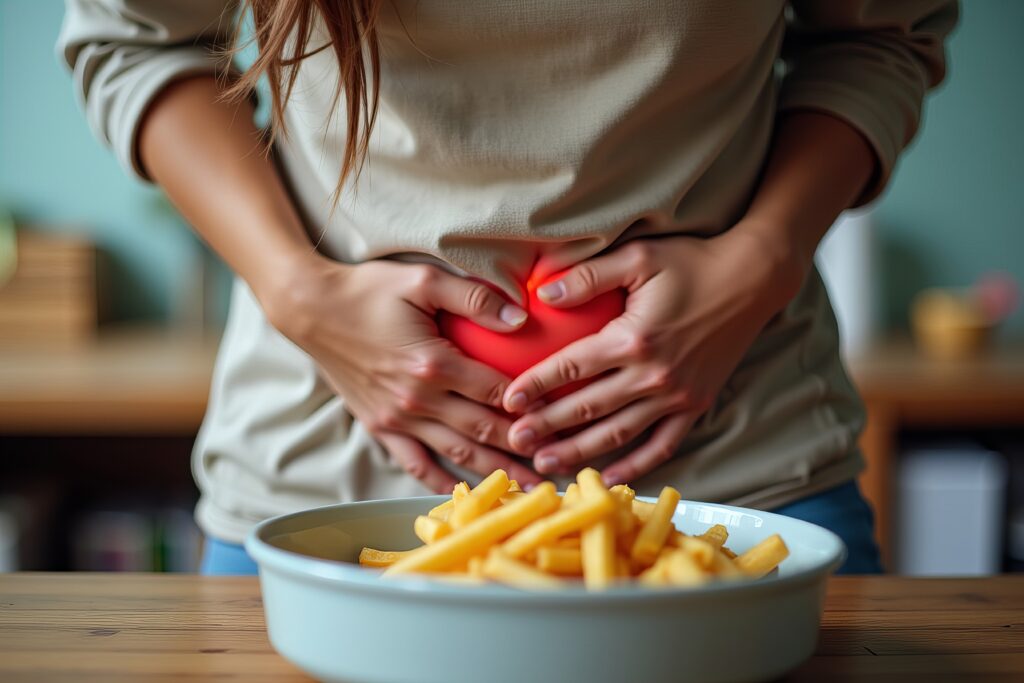
Colon & Digestive Health Specialists Dr. Karim Shakoor, M.D. & Team Pay Bill Appointments Home Who We Are Our Team Krisna Patel Karim K Shakoor Our Services Colonoscopy EGD/Upper Endoscopy Flexible Sigmoidoscopy Our Expertise Abdominal Pain Colon Cancer Constipation Diarrhea Diverticulitis Swallowing Difficulty Gastrointestinal Bleeding Heartburn Irritable Bowel Syndrome Peptic Ulcers Gas Ulcerative Colitis New Patient EEC Blog Contact Us Hamburger Toggle Menu Home Who We Are Our Team Krisna Patel Karim K Shakoor Our Services Colonoscopy EGD/Upper Endoscopy Flexible Sigmoidoscopy Our Expertise Abdominal Pain Colon Cancer Constipation Diarrhea Diverticulitis Swallowing Difficulty Gastrointestinal Bleeding Heartburn Irritable Bowel Syndrome Peptic Ulcers Gas Ulcerative Colitis New Patient EEC Blog Contact Us Hamburger Toggle Menu Pay Bill Appointments What Is Acid Reflux? Foods to Eat and Avoid Acid reflux is something many people experience — that burning feeling in the chest or throat after eating a big or heavy meal. While it may happen occasionally to anyone, frequent acid reflux can be uncomfortable and may even signal a more serious digestive issue.Making dietary changes is one of the best ways to manage acid reflux. You can greatly lessen symptoms and enhance your digestive health by knowing which foods to avoid and which foods are best for acid reflux. What Is Acid Reflux? Acid reflux happens when stomach acid moves back up into the esophagus, the tube that connects your mouth and stomach. Food and acid are normally kept in your stomach by a tiny muscle known as the lower esophageal sphincter (LES). However, acid can leak upward if this muscle weakens or relaxes at the wrong moment. When that acid touches the lining of your esophagus, it creates a burning feeling in your chest or throat. This is what most people call heartburn. Common Symptoms of Acid Reflux Burning in the chest or throat (heartburn) Sour or bitter taste in the mouth Regurgitation of food or liquid Trouble swallowing Sore throat, cough, or hoarseness If reflux happens often, it may be diagnosed as GERD (Gastroesophageal Reflux Disease), a more chronic condition that needs medical care. What Causes Acid Reflux? Several factors contribute to acid reflux, including: Diet choices – eating foods that trigger symptoms Eating habits – large meals, late-night snacking, lying down after eating Excess weight – puts more pressure on the stomach Smoking and alcohol – weaken the LES muscle Certain medical issues – like hiatal hernia or delayed digestion Acid Reflux Foods to Avoid Some foods are well-known for making reflux worse. While triggers can vary from person to person, here are the most common culprits: Spicy Foods 🌶️: Chili, hot sauces, and heavily spiced meals can irritate your digestive tract. Fried and Fatty Foods 🍟: Greasy foods like burgers, pizza, or fried chicken slow down digestion, giving acid more time to back up. Citrus Fruits 🍊: Oranges, lemons, and grapefruits are highly acidic and often trigger heartburn. Tomatoes and Sauces 🍅: Tomato-based foods like pasta sauce, salsa, or ketchup can worsen reflux. Chocolate 🍫: Unfortunately, chocolate contains both fat and caffeine — two things that relax the LES and let acid escape. Caffeinated Drinks ☕: Coffee, strong tea, and energy drinks can increase stomach acid levels. Carbonated Beverages 🥤: Sodas and sparkling water cause bloating, which puts more pressure on the stomach. Alcohol 🍷: Beer, wine, and cocktails not only irritate the esophagus but also weaken the LES. Foods That Help With Acid Reflux Positively, a lot of foods can actually lessen acid reflux and calm your digestive tract. Organizing your meals around these decisions can have a significant impact. Whole Grains 🥣: Oatmeal, brown rice, and whole-grain bread are filling, fiber-rich, and gentle on the stomach. Lean Proteins 🐟: Skinless chicken, turkey, fish, and plant-based proteins digest more easily than fatty meats. Low-Acid Fruits 🍌: Bananas, melons, apples, and pears are less acidic and easier on the esophagus. Vegetables 🥦: Green vegetables like broccoli, kale, spinach, and green beans are great choices that won’t trigger reflux. Root Vegetables 🥔: Carrots, sweet potatoes, and beets provide nutrients without irritating acid reflux. Ginger 🌿: Fresh ginger or ginger tea has natural anti-inflammatory properties and can calm the stomach. Lifestyle Tips to Manage Acid Reflux Food is important, but habits matter too. Try these lifestyle changes for better results: Eat smaller, more frequent meals Avoid lying down right after eating (wait at least 2–3 hours) Elevate the head of your bed if you get reflux at night Stay active and maintain a healthy weight Quit smoking and limit alcohol intake Drink plenty of water throughout the day When to See a Doctor While occasional heartburn is common, it’s time to get checked if you have severe symptoms or experience acid reflux twice a week. Seek medical care if you notice: Trouble swallowing Chest pain Unexplained weight loss Vomiting blood or black stools Conclusion Understanding what acid reflux is, knowing the foods that cause acid reflux, and focusing on the best food for acid reflux are powerful steps to manage this condition naturally. By making smart choices in your diet and lifestyle, you can reduce symptoms and feel better every day. Care at Colon & Digestive Health Specialists If you’re struggling with frequent acid reflux or suspect GERD, don’t wait. At Colon & Digestive Health Specialists, Dr. Karim Shakoor — the best gastroenterologist in Conyers, GA — provides expert care and personalized treatment plans to help you find lasting relief. For Life-Threatening Emergencies Call 911 Our location Colon & Digestive Health Specialists 1805 Honey Creek Commons, Ste B, Conyers GA 30013 Menu Home Our Team New Patient CDH Gallery Contact Us Privacy Policy Timings Monday – Friday : 7:30am – 4:00 pmSaturday & Sunday – CLOSED Facebook © 2026 All Rights reserved by Colon & Digestive Health Specialists