
Living with ulcerative colitis means living with uncertainty. You can go weeks — sometimes months — feeling completely fine. Then, without much warning, the cramping returns. The urgency comes back. You’re running to the bathroom multiple times a day, your energy crashes, and you’re wondering: Is this a flare? How bad is it going to get? Do I need to call my doctor, or should I go to the ER right now?
These are the questions that don’t get answered clearly enough. Most content on UC covers the condition itself — what it is, how it’s diagnosed, what medications exist. But when you’re in the middle of a flare at 11pm on a Thursday, what you actually need to know is: what’s happening in my body right now, is this serious, and what do I do next?
That’s exactly what this guide covers. No fluff, no repeating things you already know about UC — just the specific, practical information that matters most when a flare hits.
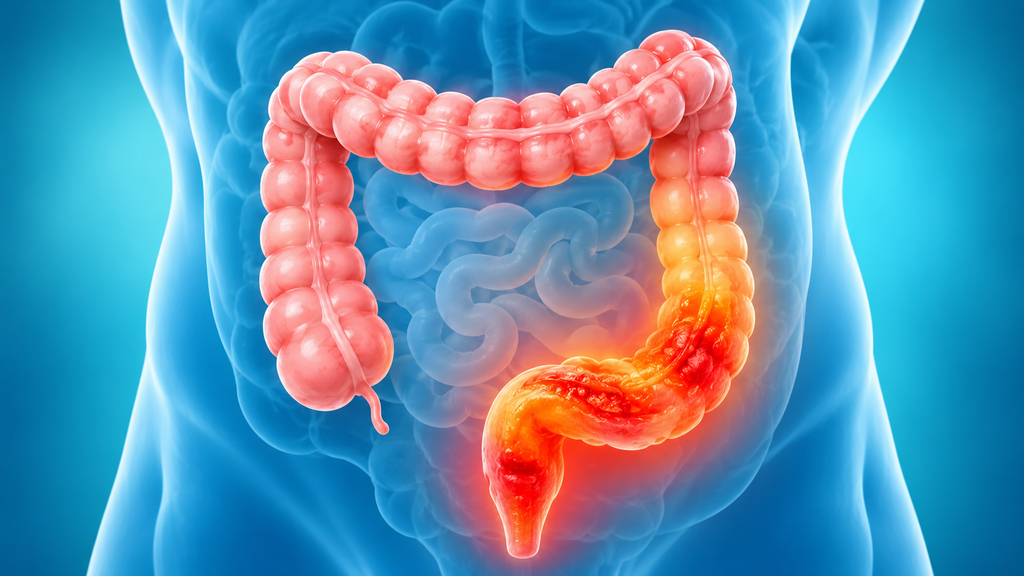
What Actually Happens During a UC Flare
Ulcerative colitis is a chronic inflammatory bowel disease that causes inflammation and ulcers along the inner lining of the colon and rectum. In remission, that inflammation is controlled — either by medication, lifestyle, or both. During a flare, the inflammation becomes active again.
When a flare begins, the inflamed colon lining becomes swollen, fragile, and prone to bleeding. The colon loses its ability to absorb water efficiently, which is why diarrhea becomes so frequent and urgent. The ulcers on the colon wall bleed, which is why blood in the stool is one of the most common flare symptoms. The inflammation triggers muscle contractions in the colon wall, which is why cramping and abdominal pain intensify.
Flares exist on a spectrum. Some are mild — a temporary uptick in symptoms that settles within a few days with rest and medication adjustments. Others are moderate to severe, requiring prompt medical intervention to prevent serious complications. And a small number are severe enough to require hospitalization.
Common Ulcerative Colitis Flare Symptoms
A UC flare doesn’t always announce itself dramatically. Sometimes it starts subtly — a little more urgency than usual, slightly looser stools — before escalating. Other times it comes on hard and fast.
The most common UC flare symptoms include:
Increased bowel frequency and urgency — Going to the bathroom more than usual, often with a sudden, difficult-to-control urgency. During a moderate flare, some patients have 6 or more bowel movements per day.
Blood in the stool — Ranging from small streaks to significant amounts of bright red blood. This is one of the most reliable indicators that inflammation is active. Any new or worsening rectal bleeding warrants a call to your gastroenterologist — don’t wait to see if it resolves on its own.
Abdominal cramping and pain — Usually in the lower left abdomen, where the sigmoid colon and rectum sit. The pain often worsens before a bowel movement and eases somewhat after.
Rectal pain or the feeling of incomplete emptying (tenesmus) — That uncomfortable sensation of needing to go even when nothing is there, or feeling like a bowel movement is never fully complete. This is caused by inflammation and spasm in the rectum.
Fatigue — Significant, often disproportionate tiredness. Active inflammation is physically taxing, and blood loss from rectal bleeding compounds this. Many patients describe flare fatigue as a heaviness that doesn’t improve with rest.
Reduced appetite and unintentional weight loss — Pain and discomfort make eating unappealing. Combined with malabsorption during active inflammation, weight loss during flares is common and worth monitoring.
What Triggers a UC Flare?
This is one of the most common questions patients ask — and one of the most frustrating to answer, because triggers vary significantly from person to person. What sends one patient into a flare may have no effect on another.
That said, certain triggers appear consistently across the research and in clinical practice:
Stopping or Changing Medication
This is the single most common cause of a UC flare. Ulcerative colitis medications — particularly mesalamine (5-ASA), immunomodulators, and biologics — work by actively suppressing the inflammation that drives the disease. When these medications are stopped, reduced in dose, or changed without medical supervision, inflammation rebounds.
This includes patients who feel well and decide to stop their medication because they “feel fine.” Feeling fine is usually the medication working — not the disease resolving. Never stop or adjust UC medication without first discussing it with your gastroenterologist.
Infections — Particularly C. difficile
Gastrointestinal infections — especially Clostridioides difficile (C. diff) — are a major and underappreciated flare trigger. C. diff can mimic a UC flare almost exactly, with worsening diarrhea, cramping, and sometimes bloody stool. It’s also more common in UC patients, particularly those on immunosuppressive therapy.
If your symptoms are worsening despite your usual medications, or if you’ve recently taken antibiotics, your gastroenterologist may want to test for C. diff before intensifying your UC treatment — because treating a C. diff infection as a UC flare can make things significantly worse.
Other GI infections (Salmonella, Campylobacter, norovirus) can also trigger flares by disturbing the gut’s bacterial balance and setting off an inflammatory cascade.
NSAIDs and Aspirin
Non-steroidal anti-inflammatory drugs — ibuprofen (Advil, Motrin), naproxen (Aleve), and high-dose aspirin — are known to trigger or worsen UC flares. NSAIDs disrupt the protective mucus layer in the gut and can directly promote intestinal inflammation.
If you have UC and need pain relief, acetaminophen (Tylenol) is the safer option. Discuss any new medications with your gastroenterologist before starting them.
Stress — Physical and Emotional
The connection between stress and IBD flares is well documented. Psychological stress — a major life event, sustained work pressure, grief, relationship strain — activates the body’s stress response, which influences gut motility, barrier function, and immune activation. Physical stress (surgery, serious illness, injury) can similarly disrupt the immune regulation that keeps UC in remission.
Stress doesn’t cause UC, but it reliably makes it harder to control. Patients who incorporate stress management — regular exercise, adequate sleep, mindfulness practices, or formal psychological support — tend to have longer periods of remission.
Dietary Factors
Food doesn’t cause UC, and no specific diet has been proven to consistently induce or prevent flares. However, certain foods commonly reported to worsen symptoms during an active flare include:
- High-fiber raw vegetables and whole grains (hard on an inflamed colon)
- Dairy products (many UC patients have secondary lactose intolerance)
- Spicy foods
- Alcohol
- Caffeine
- High-fat, greasy foods
During a flare, most gastroenterologists recommend a low-residue or low-fiber diet temporarily — not because these foods cause the flare, but because they put less mechanical stress on an already inflamed colon. Once the flare resolves, gradually reintroducing fiber is beneficial for long-term gut health.
How Long Does a UC Flare Last?
There’s no single answer — flare duration varies enormously based on severity, how quickly treatment is started, and how the individual’s disease behaves.
Mild flares that are caught early and managed promptly — with medication adjustments, rest, and dietary modifications — may resolve within one to two weeks.
Moderate flares typically take two to four weeks to come under control with appropriate treatment, which may include oral or topical corticosteroids alongside maintenance medications.
Severe flares that require hospitalization or significant medication changes can take weeks to months to fully resolve, and some patients experience persistent low-level symptoms between major flares.
What to Do at Home During a Mild UC Flare
For a mild flare — increased symptoms but still manageable, no fever, no significant bleeding — there are steps you can take at home while you contact your gastroenterologist for guidance:
Rest as much as possible. Active inflammation is physically demanding. Your body is using significant energy fighting the inflammatory process. This isn’t the time to push through fatigue.
Switch to a low-residue diet temporarily. This means reducing raw vegetables, whole grains, nuts, seeds, and high-fiber foods. Focus on easily digestible options: white rice, boiled or baked chicken, eggs, well-cooked vegetables without skin, bananas, applesauce, plain crackers. This reduces the mechanical burden on the inflamed colon.
Stay hydrated. Diarrhea causes significant fluid and electrolyte loss. Plain water is good; electrolyte drinks (without high sugar or artificial sweeteners) are better. Avoid caffeine and alcohol, both of which worsen dehydration.
Warning Signs: When to Go to the ER for a UC Flare
This is the section many patients need most — and the clearest answer we can give.
Go to the emergency room immediately if you experience any of the following:
Heavy rectal bleeding that isn’t slowing down — Significant blood loss from the colon can happen during a severe UC flare. If you are passing large amounts of blood, or if blood is appearing in the toilet bowl rather than just on the stool or paper, this is an emergency.
Fever above 101°F (38.3°C) — A high fever alongside UC symptoms can indicate a serious complication such as a severe infection, C. diff colitis, or in rare cases, toxic megacolon. Do not wait this out at home.
Severe abdominal pain that is constant and worsening — Cramping that comes and goes with bowel movements is typical of a flare. Severe, constant abdominal pain that isn’t relieved by a bowel movement — particularly if the abdomen feels rigid or distended — is a warning sign of a serious complication.
Rapid heart rate (above 90 beats per minute at rest) — Tachycardia during a UC flare can indicate significant blood loss, dehydration, or systemic infection — all of which need immediate evaluation.
Signs of severe dehydration — Inability to keep fluids down, extreme dizziness when standing, very dark urine or no urine output for many hours, confusion or disorientation.
No improvement after 24–48 hours on corticosteroids — If your gastroenterologist has prescribed oral steroids for a flare and you are not improving — or worsening — within 24 to 48 hours, go to the emergency room rather than continuing to wait.
Get Expert UC Flare Care in Conyers, GA
If you’re experiencing a flare — or if your UC has been harder to control lately — don’t wait for things to escalate before reaching out.
At Colon & Digestive Health Specialists, Dr. Karim Shakoor provides specialized, individualized care for ulcerative colitis patients across Conyers, Rockdale County, Newton County, and Henry County, Georgia. From flare management to long-term remission planning, our team is here to help you stay ahead of your disease — not just react to it.