
You just finished dinner. Maybe it was a plate of pasta with marinara, a couple of glasses of red wine, and a square of dark chocolate for dessert. Twenty minutes later, that familiar burning starts creeping up your chest. You reach for the antacids — again.
If this sounds like your Tuesday night, you’re not alone. Heartburn affects roughly 60 million Americans at least once a month, and for millions of people, certain foods are the most reliable trigger. The frustrating part? The list of “foods that cause heartburn” you find online is often so long and so broad that following it would mean eating nothing but plain rice and water.You just finished dinner. Maybe it was a plate of pasta with marinara, a couple of glasses of red wine, and a square of dark chocolate for dessert. Twenty minutes later, that familiar burning starts creeping up your chest. You reach for the antacids — again.
The truth is more nuanced — and more manageable — than that. Not everyone reacts to the same foods. Some triggers are near-universal; others are highly individual. And some foods that have a bad reputation for heartburn are actually fine for most people.
This guide walks you through both: the foods most likely to cause heartburn based on clinical evidence, the foods that can actually help calm acid reflux, and a practical system for figuring out your personal trigger list.
Why Do Certain Foods Cause Heartburn in the First Place?
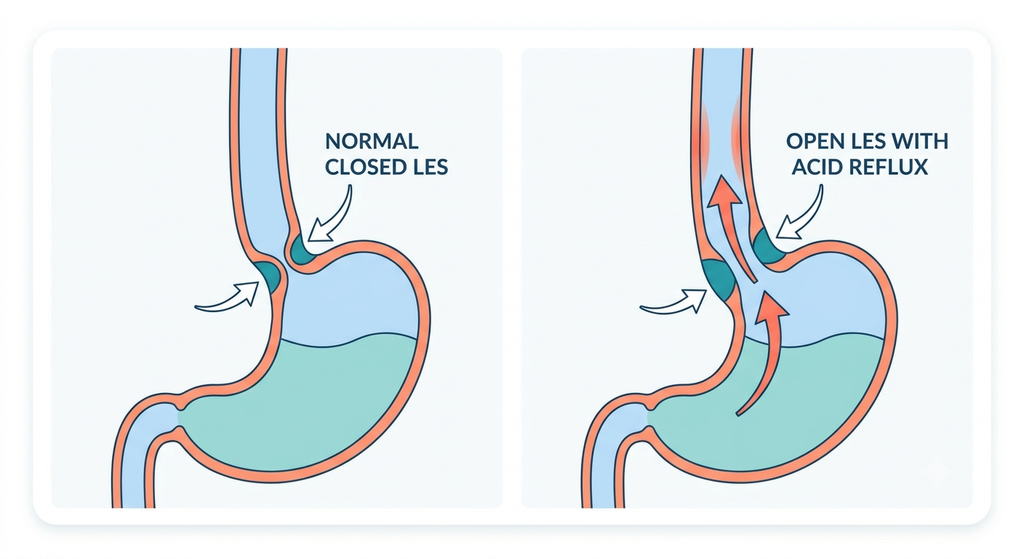
Before jumping into the list, it helps to understand the mechanism — because knowing why a food triggers heartburn makes it a lot easier to predict which foods might be a problem for you personally.
Heartburn happens when stomach acid escapes upward into the esophagus through a muscle called the lower esophageal sphincter, or LES. The LES is a one-way valve that normally keeps stomach contents where they belong. When it weakens, relaxes at the wrong time, or gets overwhelmed by pressure, acid reflux follows.
Foods cause heartburn through two main pathways:
They relax the LES directly. Certain compounds in food — particularly fat, caffeine, theobromine (in chocolate), and menthol (in peppermint) — chemically signal the LES to loosen. When the valve relaxes, stomach acid can travel upward more easily.
They increase stomach pressure. Carbonated drinks, large meals, and foods that slow digestion keep the stomach full and pressurized for longer. That sustained pressure pushes against the LES from below and can force it open.
A third factor: some foods, particularly acidic ones like citrus and tomatoes, don’t necessarily cause the reflux itself — they irritate an esophagus that’s already been damaged by acid exposure, making the burning sensation more intense even if the underlying reflux isn’t worse.
Understanding this distinction — foods that trigger reflux versus foods that aggravate an irritated esophagus — matters when you’re trying to figure out what to cut.
The Foods Most Likely to Cause Heartburn
These are the foods with the strongest and most consistent evidence as heartburn triggers. Not everyone reacts to all of them, but if you’re experiencing regular heartburn, these are the first places to look.
1. Fatty and Fried Foods
This is the single biggest dietary contributor to heartburn — and the one most people underestimate.
Fat slows gastric emptying, meaning food stays in your stomach longer. A stomach that remains full for three or four hours instead of two is a stomach under prolonged pressure, pushing against the LES. Fat also directly stimulates the release of cholecystokinin, a hormone that relaxes the LES.
The effect is dose-dependent: a small amount of healthy fat (olive oil, avocado, nuts) is unlikely to trigger reflux in most people. A plate of fried chicken, French fries, or a burger with cheese is a different story.
2. Chocolate
Chocolate is one of the most reliably reported heartburn triggers, and it works through multiple mechanisms simultaneously. It contains fat, caffeine, and theobromine — all three of which independently relax the LES. It’s also mildly acidic.
Dark chocolate, despite its health reputation, is actually a stronger heartburn trigger than milk chocolate for most people because it has higher concentrations of caffeine and theobromine. This surprises patients regularly.
If chocolate reliably triggers your heartburn, small amounts of milk chocolate may be tolerable for some people, but the safest approach is reduction rather than substitution.
3. Coffee and Caffeine
Caffeine is a well-documented LES relaxant. It also stimulates acid production in the stomach, giving you more acid at a time when your LES is less able to contain it.
Regular coffee is the most common source, but the same effect applies to espresso, energy drinks, black and green tea, and caffeinated sodas.
Interestingly, the acid in coffee is only part of the problem — decaf coffee also triggers heartburn in many people, because it still contains the other compounds that promote acid secretion. Switching to decaf helps some patients and does nothing for others.
If you can’t give up coffee (and most people can’t), a few strategies help: drink it with food rather than on an empty stomach, avoid it within three hours of bedtime, and limit to one cup rather than multiple throughout the day.
4. Alcohol
Alcohol contributes to heartburn in several ways. It relaxes the LES, stimulates stomach acid production, and can delay gastric emptying in larger amounts. Wine and beer have the additional factor of being acidic themselves.
Red wine tends to trigger more heartburn than white wine for most patients — likely due to its higher tannin content. Beer is often underestimated as a trigger; the carbonation adds an additional pressure component on top of the alcohol effect.
For patients with frequent heartburn, even moderate alcohol consumption — one or two drinks — can be enough to trigger symptoms, particularly at night.
5. Citrus Fruits and Juices
Oranges, grapefruits, lemons, limes, and their juices are highly acidic — with a pH between 2 and 4. For someone with an already-irritated esophagus, consuming acidic foods amplifies the burning sensation even if the acid reflux itself isn’t worse.
That said, citrus is more of an aggravator than a primary trigger for most people. If your esophagus is in good shape, a glass of orange juice may not bother you at all. If you already have active reflux or mild esophagitis, that same glass can feel like swallowing fire.
The form matters too — a whole orange has fiber and requires chewing, which slows acid exposure. Orange juice is concentrated, faster to consume, and hits the esophageal lining more directly.
6. Tomatoes and Tomato-Based Foods
Tomatoes are both acidic and a potent trigger for acid production in the stomach. Tomato sauce, pizza, salsa, ketchup, and canned tomatoes are among the most commonly reported heartburn triggers — particularly for patients with existing GERD.
The cooking process concentrates tomatoes’ acidity, which is why tomato sauce tends to trigger more heartburn than a fresh tomato slice on a sandwich. Spicy tomato sauces add the compound capsaicin on top of the acidity, making them a double trigger.
7. Spicy Foods
Capsaicin — the compound that makes chili peppers hot — slows gastric emptying and can irritate the esophageal lining directly. It doesn’t universally cause reflux in the way fat or caffeine does, but for patients who are already prone to heartburn, spicy foods are a reliable escalator.
The reaction to spicy food is highly individual. Some patients with GERD eat spicy food without difficulty; others find that even mild heat triggers significant symptoms. If you’re in the latter group, tracking spice level in your food diary is worthwhile.
8. Carbonated Beverages
The bubbles in sparkling water, sodas, and beer expand inside the stomach, increasing internal pressure. This physical pressure pushes upward against the LES — and for patients who are already prone to reflux, carbonation alone can be enough to trigger symptoms.
Regular soda adds multiple trigger factors on top of carbonation: caffeine (in cola), high sugar content (which can increase acid production), and significant acidity. Sparkling water is a much better choice than soda but can still cause issues for patients with severe reflux.
9. Garlic and Onions
Raw garlic and onions — particularly raw onions — are among the most underappreciated heartburn triggers. Both contain compounds that relax the LES and stimulate acid production. Cooked onions tend to be better tolerated than raw because cooking breaks down the most problematic compounds.
If you regularly make salads with raw onion, cook with large amounts of raw garlic, or eat dishes where these are dominant raw ingredients, they’re worth testing in your elimination process.
10. Peppermint
This one surprises almost everyone. Peppermint tea is often thought of as soothing for the stomach — and for some digestive complaints, it genuinely is. But for acid reflux, peppermint is a trap.
Menthol, peppermint’s active compound, directly relaxes the LES. Peppermint tea, peppermint candies, and mint-flavored gum can all trigger or worsen heartburn. If you’ve been drinking peppermint tea to calm your digestion after dinner and wondering why your heartburn persists, this may be your answer.
Foods and Drinks That Can Make Heartburn Worse — Even If They Don’t Cause It
These aren’t primary triggers for most people, but they can amplify existing heartburn or make an irritated esophagus significantly more uncomfortable:
- Very hot beverages — Hot tea, coffee, or soup consumed very quickly can irritate an already-sensitive esophageal lining
- Highly processed foods — High sodium content promotes water retention and can increase stomach pressure over time
- Large portion sizes of any food — Volume matters as much as content; a huge serving of otherwise low-trigger food can cause reflux simply through stomach distension
- Eating too quickly — Swallowing air and food in large amounts without adequate chewing puts more pressure on the stomach faster
Foods That Help with Heartburn
The good news: a heartburn-friendly diet isn’t a punishment diet. There are genuinely satisfying, nutritious foods that are unlikely to trigger reflux and that may actively help.
| Food | Why It Helps |
|---|---|
| Oatmeal | High fiber, absorbs stomach acid, filling without being heavy |
| Bananas | Low acid, naturally soothing to the esophageal lining |
| Melons (watermelon, cantaloupe, honeydew) | Very low acid, hydrating, gentle on digestion |
| Ginger | Anti-inflammatory, speeds gastric emptying, reduces nausea |
| Leafy greens (spinach, kale, arugula) | Low acid, high fiber, support healthy digestion |
| Lean proteins (chicken breast, turkey, fish) | Low fat, digest quickly, minimal LES impact |
| Egg whites | Low fat, easily digested — egg yolks are higher fat and more likely to trigger symptoms |
| Non-citrus fruits (apples, pears, peaches) | Moderate fiber, low acid, generally well tolerated |
| Whole grains (brown rice, whole wheat bread, quinoa) | High fiber supports digestion and reduces reflux frequency |
| Almond milk | Low acid alternative to regular milk; milk itself can initially soothe but later stimulate acid |
| Fennel | Natural digestive aid, may help reduce bloating and reflux |
| Herbal teas (chamomile, licorice root) | Non-caffeinated, soothing — note: avoid peppermint tea |
Lifestyle Habits That Trigger Heartburn as Much as Food Does
Food is only part of the equation. Many patients clean up their diet and still struggle with heartburn because the behavioral triggers are just as significant:
Eating late at night. The two-to-three-hour window between your last meal and lying down is one of the most important factors in nighttime heartburn. When you eat and immediately lie down, gravity is no longer helping keep stomach contents down. Give your stomach time to empty before bed.
Eating too much at once. Stomach distension from large meals increases pressure on the LES regardless of what you ate. Smaller, more frequent meals are consistently better for reflux management than three large ones.
Wearing tight clothing. Tight waistbands, belts, and shapewear increase abdominal pressure. It sounds minor, but patients who switch to looser clothing — particularly at mealtimes — often notice a meaningful difference.
Lying down or bending over immediately after eating. Both positions reduce the gravitational advantage that keeps acid in the stomach. Even a 15-minute walk after dinner is better than sitting on the couch or going straight to bed.
Eating under stress. Stress increases stomach acid production and slows digestion. A meal eaten quickly during a stressful workday may trigger symptoms that the same meal eaten calmly would not.
When Diet Changes Aren’t Enough
Dietary modification works well for mild, occasional heartburn. For many patients, identifying and reducing trigger foods — combined with not eating close to bedtime and keeping portions reasonable — significantly reduces symptom frequency.
But diet alone has limits. If you’ve made consistent dietary changes for four to six weeks and your heartburn is still happening multiple times a week, something else is driving it. The most common explanations include:
- Structural issues — A hiatal hernia, where part of the stomach protrudes through the diaphragm, impairs LES function regardless of what you eat
- GERD — Gastroesophageal reflux disease involves chronic LES dysfunction that dietary changes alone can’t fully correct
- Esophagitis — If the esophageal lining is already inflamed or damaged from prior acid exposure, even low-trigger foods can cause symptoms until the tissue heals
- Delayed gastric emptying (gastroparesis) — When the stomach empties slowly, food and acid stay present longer than normal, increasing reflux risk independent of diet
When to See a Gastroenterologist
Managing heartburn through diet is a reasonable first step — but it has a time limit. See a gastroenterologist if:
- Heartburn is occurring twice a week or more despite dietary changes
- You are taking antacids or PPIs more than twice a week
- You experience difficulty swallowing, even occasionally
- You have unintentional weight loss alongside digestive symptoms
- Your symptoms have persisted longer than three months
- You are over 50 with new or changing heartburn symptoms
- You have a family history of Barrett’s esophagus or esophageal cancer
Get Expert Heartburn Care in Conyers, GA
If dietary changes haven’t given you the relief you were hoping for — or if your heartburn keeps coming back no matter what you eat — it’s time to find out what’s actually driving it.
At Colon & Digestive Health Specialists, Dr. Karim Shakoor provides thorough, individualized evaluation and treatment for heartburn and GERD for patients across Conyers, Rockdale County, Newton County.