
BS (Irritable Bowel Syndrome) is one of the most common digestive disorders, affecting millions of people worldwide. Many patients notice that their IBS symptoms worsen during periods of emotional stress, anxiety, or major life changes. This is not a coincidence. IBS (Irritable Bowel Syndrome) and stress are closely linked through what doctors call the gut-brain connection — a complex communication system between your digestive system and your nervous system.
If you’ve ever experienced abdominal pain before a stressful event or noticed digestive flare-ups during emotional strain, your body is showing you how deeply connected your gut and brain truly are.
In this guide, we’ll explain how stress affects IBS, why symptoms flare up, and what you can do to regain control of your digestive health.
What Is IBS (Irritable Bowel Syndrome)?
IBS (Irritable Bowel Syndrome) is a functional gastrointestinal disorder that affects how the intestines work. Unlike inflammatory bowel diseases, IBS does not cause structural damage to the digestive tract, but it significantly impacts daily life.
Common IBS Symptoms
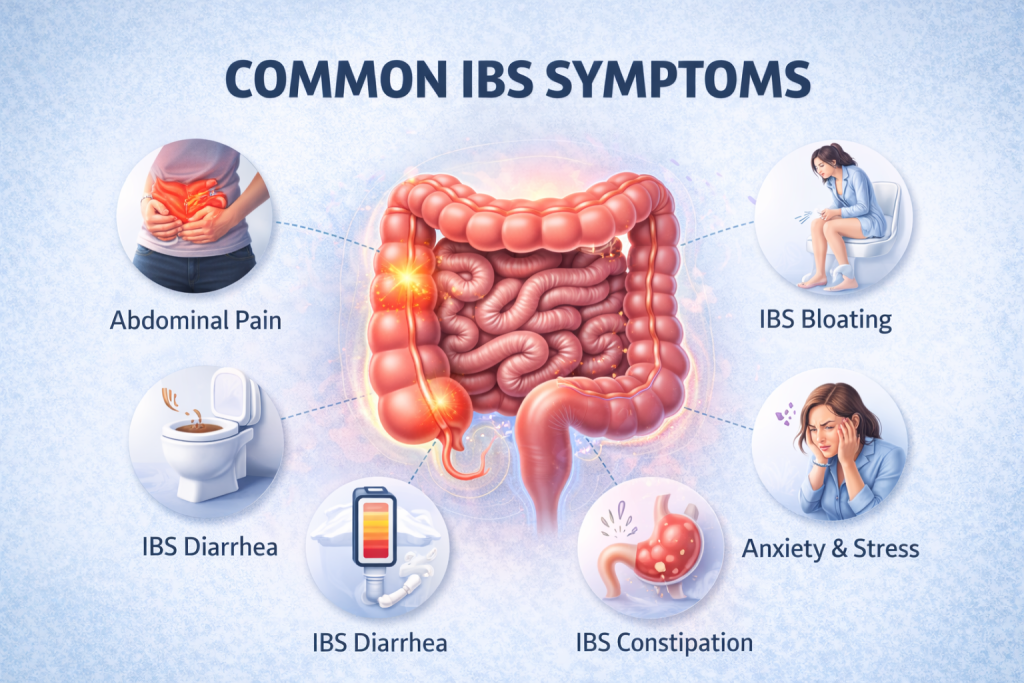
People with IBS often experience:
- Recurrent abdominal pain or cramping
- Bloating and excessive gas
- Diarrhea, constipation, or alternating between both
- Urgency to use the bathroom
- Mucus in stool
Symptoms tend to come and go, often triggered by diet, hormonal changes, or stress.
The Gut-Brain Connection Explained
The digestive system has its own nervous system called the enteric nervous system, sometimes referred to as the “second brain.” This system communicates directly with the central nervous system through the vagus nerve.
How Stress Affects the Digestive System
When you experience stress:
- Stress hormones like cortisol are released
- Gut motility (movement of intestines) changes
- Sensitivity to pain increases
- Gut bacteria balance may shift
- Inflammation may rise
For people with IBS (Irritable Bowel Syndrome), the digestive tract is already more sensitive. Stress amplifies this sensitivity, leading to stronger IBS symptoms.
Can Stress Cause IBS?
Stress alone may not directly cause IBS, but it is a powerful trigger. Many patients report that their first IBS symptoms appeared during:
- Major life transitions
- Work pressure
- Relationship stress
- Anxiety or depression
IBS Flare-Up Triggers Related to Stress
Common stress-related IBS flare triggers include:
- Lack of sleep
- Emotional trauma
- Chronic workplace pressure
- Travel anxiety
- Social stress
IBS Pain Location: Why Stress Makes It Worse
Many patients ask about IBS pain location. IBS pain is typically felt in the lower abdomen but can vary from person to person.
During stress:
- Muscles in the intestines contract irregularly
- Gas builds up
- Cramping intensifies
Because IBS involves heightened pain sensitivity (visceral hypersensitivity), stress makes normal digestive activity feel painful.
IBS Diarrhea vs IBS Constipation and Stress
IBS has different subtypes:
- IBS-D (diarrhea predominant)
- IBS-C (constipation predominant)
- IBS-M (mixed type)
Stress affects each subtype differently.
Stress and IBS Diarrhea
Stress speeds up intestinal movement, leading to urgency and loose stools.
Stress and IBS Constipation
Stress may slow bowel movement or tighten pelvic muscles, causing difficulty passing stool.
Understanding your subtype helps tailor treatment strategies.
How Is IBS Diagnosed?
IBS (Irritable Bowel Syndrome) is diagnosed based on symptoms and medical evaluation.
- Abdominal pain at least one day per week
- Symptoms lasting at least three months
- Association with bowel movement changes
IBS Tests and Evaluation
While there is no single “IBS test,” doctors may perform:
- Blood tests
- Stool tests
- Colonoscopy (if red-flag symptoms exist)
- Imaging studies
Testing helps rule out inflammatory bowel disease (IBD), celiac disease, or other serious conditions.
IBS vs IBD: Important Difference
| IBS | IBD |
|---|---|
| Functional disorder | Inflammatory disease |
| No structural damage | Causes intestinal inflammation |
| Does not increase cancer risk | May increase complications |
If symptoms include blood in stool, unexplained weight loss, or fever, further testing is essential.
Best IBS Treatment Options for Stress-Related Symptoms
1. Stress Management Techniques
Since stress directly impacts IBS, learning to regulate your nervous system is critical.
Effective methods include:
- Deep breathing exercises
- Cognitive behavioral therapy (CBT)
- Meditation
- Yoga
- Regular physical activity
2. IBS Diet and the Low FODMAP Diet
Diet plays a major role in IBS management.
The low FODMAP diet helps reduce fermentable carbohydrates that cause gas and bloating. Foods often limited include:
- Certain dairy products
- Wheat products
- Onions and garlic
- Some fruits
3. IBS Medication Options
Treatment may include:
- Antispasmodics for cramping
- Fiber supplements
- Laxatives (for IBS-C)
- Anti-diarrheal medications (for IBS-D)
- Certain antidepressants to regulate gut-brain signaling
Is IBS Dangerous?
IBS is not life-threatening, but it can significantly affect quality of life. The key is distinguishing IBS from more serious digestive disorders.
If symptoms change suddenly or worsen, medical evaluation is necessary.
When to See a Gastroenterologist for IBS
Seek medical care if you experience:
- Persistent abdominal pain
- Blood in stool
- Unexplained weight loss
- Symptoms waking you at night
- Family history of colon cancer
Taking Control of IBS and Stress
Understanding the gut-brain connection empowers you to take proactive steps. IBS (Irritable Bowel Syndrome) and stress are deeply intertwined, but with the right care plan, symptoms can be managed effectively.
Your digestive system does not operate independently from your emotional health. Treating both together leads to better long-term outcomes.
Schedule Expert IBS Care Today
If stress is worsening your IBS symptoms or digestive discomfort is affecting your daily life, professional evaluation can provide clarity and relief.
At Colon & Digestive Health Specialists, we provide personalized care plans designed to address both digestive health and stress-related triggers.